Longevity Analysis using Amsayu method
Share this post
Amsayu Longevity Analysis
Amsayu Method of Longevity - Classical Explanation and Applied Study
1. Concept of Longevity Assessment in Vedic Astrology
In Vedic astrology, the assessment of lifespan (Ayu) is not derived from a single rule or yoga. Instead, classical texts prescribe multiple longevity methods, each applicable under specific conditions of planetary strength. These methods include Pindayu, Naisargikayu, Lagnayu, and Amsayu.
Among these, Amsayu is a mathematically structured technique that derives longevity from planetary divisions, particularly the Navamsa. The method is based on the principle that a planet’s subtle strength (Amsa bala) plays a crucial role in sustaining life beyond mere Rasi-level placement.
2. When Amsayu Should Be Applied
Classical authorities state that Amsayu must be applied only after comparing the relative strength of the Lagna, the Sun, and the Moon. This comparison determines which longevity method is valid.
- If the Sun dominates - Pindayu is preferred.
- If the Moon dominates - Naisargikayu is considered.
- If the Lagna dominates - Amsayu becomes applicable.
A strong Lagna implies that the native’s vitality is rooted in bodily constitution, adaptability, and self-preserving capacity, rather than solar authority or lunar sensitivity.
-
3. Verification of Applicability for the Present Chart
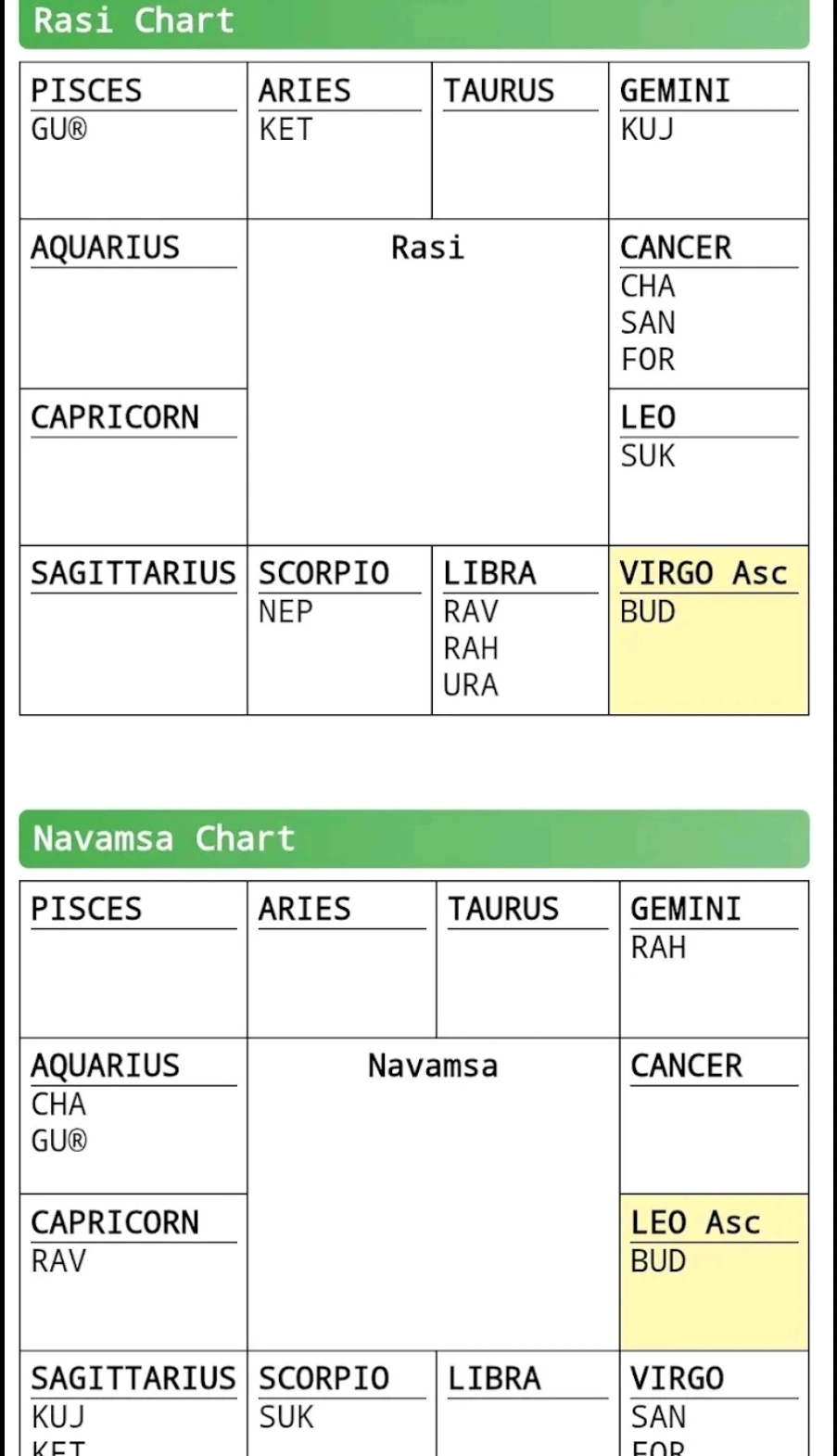
In this chart, Virgo rises as the Ascendant, with Mercury placed in its own sign. The Sun is located in Libra, its sign of debilitation, while the Moon, though in Cancer, is afflicted by Saturn.
This establishes the predominance of Lagna over Sun and Moon, thereby validating the use of Amsayu for longevity estimation.
4. Philosophical Basis of the Amsayu Method
The word “Amsa” refers to a division, and Amsayu derives longevity from the number and quality of Navamsas occupied by each planet. Each Navamsa is treated as a unit of life force, later converted into years through a classical scaling process.
Unlike yoga-based longevity indications, Amsayu is largely arithmetic. However, the final result is modified by planetary dignity (Bharan Sanskar) and affliction (Haran Sanskar), ensuring that qualitative strength is not ignored.
5. Planetary Data Used for Calculation
Rasi Placements (for dignity and affliction)
| Planet | Rasi Placement |
|---|---|
| Lagna | Virgo |
| Sun | Libra (Debilitated) |
| Moon | Cancer (Afflicted) |
| Mars | Gemini |
| Mercury | Virgo (Own sign) |
| Jupiter (R) | Pisces (Own sign) |
| Venus | Leo |
| Saturn | Cancer |
| Rahu | Libra |
| Ketu | Aries |
Navamsa Placements (core Amsayu basis)
| Planet | Navamsa Sign |
|---|---|
| Lagna | Leo |
| Sun | Capricorn |
| Moon | Aquarius |
| Mars | Sagittarius |
| Mercury | Leo |
| Jupiter (R) | Aquarius |
| Venus | Scorpio |
| Saturn | Virgo |
| Rahu | Gemini |
| Ketu | Sagittarius |
6. Amsayu Calculation - Planet-wise Contribution
Each Navamsa contributes twelve years of potential life. Enhancements are applied for strength, while reductions are applied for affliction, following classical Bharan and Haran rules.
| Planet | Navamsa | Base Years | Adjustment | Final Years |
|---|---|---|---|---|
| Lagna | Leo | 60 | None | 60 |
| Sun | Capricorn | 120 | Debilitation (÷2) | 60 |
| Moon | Aquarius | 132 | Affliction (÷2) | 66 |
| Mars | Sagittarius | 108 | None | 108 |
| Mercury | Leo | 60 | Own sign (×2) | 120 |
| Jupiter (R) | Aquarius | 132 | Own sign + Retrograde (×3) | 396 |
| Venus | Scorpio | 96 | None | 96 |
| Saturn | Virgo | 72 | None | 72 |
| Rahu | Gemini | 36 | None | 36 |
| Ketu | Sagittarius | 108 | None | 108 |
7. Final Longevity Derivation
Human Longevity = Total ÷ 180
The derived longevity falls within the range of approximately sixty-five to seventy years, placing the native firmly in the Madhyayu category.
8. Interpretative Notes
- A strong Lagna and Lagna lord provide resilience.
- Jupiter acts as a major life-sustaining planet.
- Solar debility and lunar affliction introduce health-related challenges.
- Recent completion of Ashtama Shani aligns with longevity preservation.
9. Classical Caution
Amsayu Method of Longevity - Complete Classical Explanation
1. Longevity Assessment in Vedic Astrology
Vedic astrology approaches longevity (Ayu) as a multidimensional subject. No single factor, planet, or yoga is considered sufficient to judge lifespan. Classical texts therefore prescribe multiple longevity systems, each to be used only under specific structural conditions of a horoscope.
The principal longevity systems described are Pindayu, Naisargikayu, Lagnayu, and Amsayu. Each of these reflects a different source of life force. Misapplication of a method leads to distorted results, which is why classical authors insist on strict applicability rules.
2. Place of Amsayu Among Longevity Methods
Amsayu is a divisional longevity technique. The term “Amsa” denotes a fractional division, and the method derives life potential from the Navamsa positions of planets. Unlike methods based purely on Rasi strength, Amsayu evaluates how well planetary energies sustain life at a subtler level.
This method is especially relevant when bodily constitution, adaptability, and self-preservation dominate the horoscope rather than solar authority or lunar sensitivity.
3. Applicability Rule for Amsayu
Before applying Amsayu, the astrologer must compare the strength of three primary life indicators:
- The Ascendant (Lagna)
- The Sun
- The Moon
The strongest among these determines the applicable longevity system:
- Sun dominant - Pindayu
- Moon dominant - Naisargikayu
- Lagna dominant - Amsayu
4. Verification of Applicability in the Present Horoscope
In the present horoscope, Virgo rises as the Ascendant, and its lord Mercury occupies its own sign, contributing significant strength to Lagna. The Sun is placed in Libra, its sign of debilitation. The Moon, though in its own sign Cancer, is afflicted by Saturn.
This comparative assessment clearly establishes Lagna as the dominant life indicator, validating the use of the Amsayu method.
5. Structural Logic of the Amsayu Calculation
Amsayu assigns a numerical life contribution to each planet and the Ascendant based on their Navamsa placement. Each Navamsa is treated as a unit of life force. These units are converted into years using a classical scale.
The raw contribution is then modified using two corrective principles:
- Bharan Sanskar - enhancement due to dignity or exceptional strength
- Haran Sanskar - reduction due to debility or affliction
6. Planetary Positions Used
Sample Birth Chart Rasi Placements (for dignity and affliction)
| Planet | Rasi Placement |
|---|---|
| Lagna | Virgo |
| Sun | Libra (Debilitated) |
| Moon | Cancer (Afflicted) |
| Mars | Gemini |
| Mercury | Virgo (Own sign) |
| Jupiter (R) | Pisces (Own sign) |
| Venus | Leo |
| Saturn | Cancer |
| Rahu | Libra |
| Ketu | Aries |
Navamsa Placements (core Amsayu basis)
| Planet | Navamsa Sign |
|---|---|
| Lagna | Leo |
| Sun | Capricorn |
| Moon | Aquarius |
| Mars | Sagittarius |
| Mercury | Leo |
| Jupiter (R) | Aquarius |
| Venus | Scorpio |
| Saturn | Virgo |
| Rahu | Gemini |
| Ketu | Sagittarius |
7. Amsayu Calculation - Planetary Contribution
| Planet | Navamsa | Base Years | Adjustment | Final Years |
|---|---|---|---|---|
| Lagna | Leo | 60 | None | 60 |
| Sun | Capricorn | 120 | Debility (÷2) | 60 |
| Moon | Aquarius | 132 | Affliction (÷2) | 66 |
| Mars | Sagittarius | 108 | None | 108 |
| Mercury | Leo | 60 | Own sign (×2) | 120 |
| Jupiter (R) | Aquarius | 132 | Own sign + Retrograde (×3) | 396 |
| Venus | Scorpio | 96 | None | 96 |
| Saturn | Virgo | 72 | None | 72 |
| Rahu | Gemini | 36 | None | 36 |
| Ketu | Sagittarius | 108 | None | 108 |
8. Final Longevity Derivation
Human Longevity = Total ÷ 180
The derived lifespan falls within the medium longevity category (Madhyayu), indicating stable life expectancy with periods of strain and recovery.
9. Interpretative Summary
- Strong Lagna and Lagna lord ensure survival capacity.
- Jupiter provides major longevity protection.
- Solar debility and lunar affliction create health challenges.
- Completion of Ashtama Shani supports recovery and stability.
Comments